Read Less. Know More.
The key ideas from every book worth reading
Book summaries that save hours and sharpen decisions.
Get concise, well-crafted summaries from the world's best nonfiction books. Read the core ideas in minutes, then decide what deserves a deeper dive.
7-day free trial, then $15/month
Business · Startups
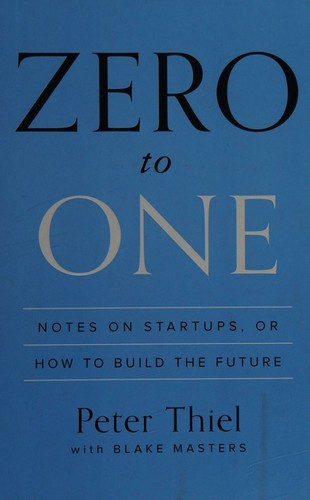
Zero to One Summary
Peter Thiel argues that copying an existing business takes the world from 1 to n, but building something genuinely new takes it from 0 to 1 -- and only the second kind of company creates real value.
⏱ 8 min read
📖 Peter Thiel · 2014
⭐ 4.4/5 · 100K+ ratings
📦 3M+ copies sold
The One-Sentence Version
Peter Thiel argues that copying an existing business takes the world from 1 to n, but building something genuinely new takes it from 0 to 1 -- and only the second kind of company creates real value.
The Core Idea
Thiel's central argument is a provocation: competition is for losers. Every business school teaches competitive strategy, but Thiel argues that competition destroys profit margins and forces companies to fight over existing markets rather than create new ones. The best businesses build monopolies -- not through illegal means but by solving a problem so completely that no one can compete with them. Google owns search. Amazon owns e-commerce infrastructure. These companies do not succeed by being slightly better than competitors; they succeed by making the category irrelevant.
The most contrarian thing of all is not to oppose the crowd but to think for yourself.
The zero to one metaphor is the book's organizing frame. Going from zero to one is creating something new -- a genuinely novel product, technology, or distribution model. Going from one to n is globalization: taking something that works and replicating it everywhere. Thiel argues that most startup culture focuses on the second when it should focus on the first. The hard part is not scaling; it is having something worth scaling. The question he presses founders to answer is: what do you believe that almost no one else agrees with?
Key Takeaways
1
Aim for monopoly, not competition - A monopoly captures value by solving a problem better than anyone else can. Competition creates industries where everyone works hard and no one makes money. Thiel argues that if your company is in a competitive market, something has gone wrong. The goal is to find or create a space where you can be definitively first.
2
The power law dominates venture returns - Venture capital returns do not follow a normal distribution. One investment typically returns more than the entire rest of the portfolio combined. This means the only question that matters is whether you could be building the biggest company in your fund -- not whether you are making reasonable bets across a diversified portfolio.
3
Secrets still exist - Thiel argues that most people have stopped believing secrets exist -- unexplored territory, ideas that are true but not yet widely accepted. He sees this as the biggest obstacle to innovation. Every great company was built on a secret: something the founders believed that others did not.
4
Distribution is as important as product - Most founders underestimate how hard it is to get their product to customers. Thiel argues that if you have not thought carefully about distribution -- exactly how you will acquire customers at scale -- your product will fail regardless of its quality. The best distribution strategy is usually not obvious.
The Seven Questions Every Startup Must Answer
Thiel closes the book with seven specific questions he uses to evaluate any startup: engineering, timing, monopoly, people, distribution, durability, and the secret question. Most startups that fail, he argues, fail because they have not honestly answered at least one of these...
🔒
Read the Full Summary
Get the complete Zero to One breakdown plus a new summary delivered to your inbox every week.
- Full breakdown - every framework and key idea
- New summaries delivered weekly, no effort required
- On-demand access - any book, any time
- PDF download on every summary
- Cancel anytime
Start free · Then $15 / month
Start 7-Day Free Trial
No credit card required · Cancel anytime