Read Less. Know More.

The key ideas from every book worth reading

Book summaries that save hours and sharpen decisions.

Get concise, well-crafted summaries from the world's best nonfiction books. Read the core ideas in minutes, then decide what deserves a deeper dive.

Start Free Trial What is BookScribe?
7-day free trial, then $15/month
Spirituality · Self-Help

The Untethered Soul Summary

You are not the voice in your head or the emotions in your body. You are the one who is aware of both, and that awareness is your path to freedom.

⏱ 8 min read 📖 Michael A. Singer · 2007 ⭐ 4.7/5 · 100K+ ratings 📦 2M+ copies sold
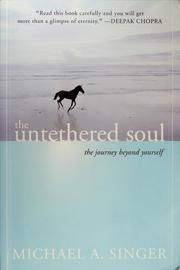
The Untethered Soul by Michael A. Singer

The Untethered Soul

By Michael A. Singer
#1 NYT Bestseller 📅 2007 ⏳ 200 pages
📦 Buy on Amazon →

The One-Sentence Version

You are not the voice in your head or the emotions in your body. You are the one who is aware of both, and that awareness is your path to freedom.

The Core Idea

Michael Singer opens The Untethered Soul with a simple question: who are you? Not your name, your job, or your history. What is the entity that notices all of those things? Singer argues that you are the witness, the pure consciousness that observes thoughts, emotions, and sensations without being any of them. Most people spend their entire lives identified with the inner voice, mistaking its commentary for reality and its preferences for genuine needs.

The only way to inner freedom is through the one who watches the self.

Singer introduces the concept of Samskara: stored impressions of past experiences that were not fully processed at the time and remain lodged in the psyche as blocked energy. When something triggers a Samskara, you feel a spike of emotion. Most people react by pushing the feeling down or acting on it, which preserves the block. Singer's alternative is to let it pass through you completely by staying open and relaxed, no matter how uncomfortable. Over time, this practice clears the blocks and opens the heart.

Key Takeaways

1
The roommate in your head - Singer asks you to imagine a person who never stops talking, second-guessing, and catastrophizing. That is the inner voice. Most people would never tolerate such a person in their home, yet they live entirely identified with that voice. Recognizing it as a separate phenomenon is the first step out.
2
The open vs. closed heart - The heart can be open or closed. A closed heart contracts around stored pain and fear. An open heart lets energy flow through. Singer argues that choosing to keep your heart open, especially when it hurts, is the highest act of spiritual practice and the source of the deepest joy.
3
Let it pass through - When fear, sadness, or anger arises, the instruction is to relax around it rather than push it away or indulge it. Resistance keeps energy stored. Relaxing allows it to move. Every difficult feeling that passes through you completely weakens its hold on you.
4
The seat of consciousness - Singer teaches that you are always the observer, never the object observed. From the seat of consciousness, you can watch thoughts, emotions, and the body without being swept away by them. This perspective does not come from thinking. It comes from practice.

Going Beyond and the Nature of Death

Singer's final chapters take on the deepest spiritual questions: what lies beyond the personal self, and what death reveals about the nature of consciousness. These chapters are where the book becomes something other than self-help...

🔒

Read the Full Summary

Get the complete The Untethered Soul breakdown plus a new summary delivered to your inbox every week.

Start free · Then $15 / month
Start 7-Day Free Trial
No credit card required · Cancel anytime